

16 Important Truck Terms You Need to Know
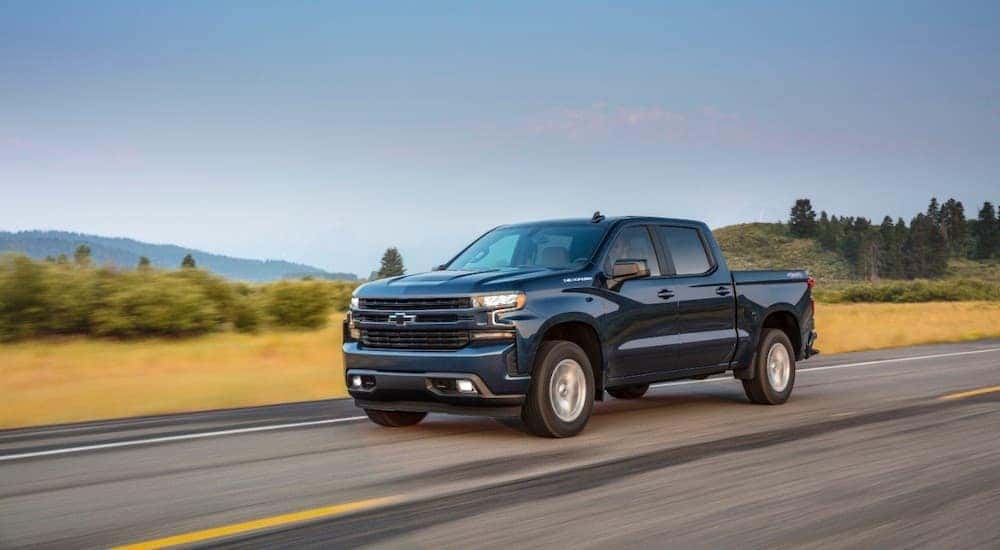
Shopping for a truck, regardless of whether you want one that’s new or used, can feel a bit overwhelming if you don’t know the lingo. Your goal should typically be to find a model that meets your needs in terms of the features you want, the power that you need, and the kind of capability that you require. Typing “used trucks near me” into your favorite search engine can be a good place to start, but you need to be able to understand the results you end up with. While we’re always happy to help you with any questions you have, it can make your shopping experience a lot easier if you already know what certain terms mean.
Today, we’re going to take a look at some of the most common and important terms you need to know when shopping for a truck. These are going to be specific truck terminology rather than standard car-buying stuff – so we’re not going over things like “interest rate” or “Certified Pre-Owned.” You might already know some of these truck terms, but it’s always a good idea to get a refresher or a reminder. There’s nothing wrong with not knowing a term – no one is born knowing what these mean – so don’t be afraid to ask the team here at Colonial Motor Mart if you have any questions.
1 – Payload Capacity
One of the most common terms you will see when shopping for a truck, the payload capacity indicates how much weight you can load onto the truck itself. This includes the weight of all passengers, including you as the driver, and any cargo inside the cab or on the bed. So if you see a payload capacity of 2,000 lbs, don’t think that you can load up the cab with all your friends and their gear and still fit one ton of cargo in the bed.
2 – Towing Capacity
The other term that you’ll see when looking at the capability of a truck, the towing capacity (sometimes listed as “trailering capacity”) is how much weight it can pull behind it. This includes the weight of the trailer as well as anything it is carrying. So a truck with a 10,000 lb towing capacity can pull up to 10,000 lbs behind it – including the trailer and everything loaded onto it. The trailer’s tongue weight (generally around 10% of the total weight) also needs to be considered when calculating the truck’s payload capacity.
3 – Curb Weight
When you start looking at the specs on a truck – beyond just marketing material – you’ll see some more precise language used. Curb weight indicates the weight of the truck when it is empty without any passengers or cargo on it. This weight includes gas and other fluids, so it’s basically the weight of the truck fresh from the manufacturer with nothing else in it.
4 – GVWR
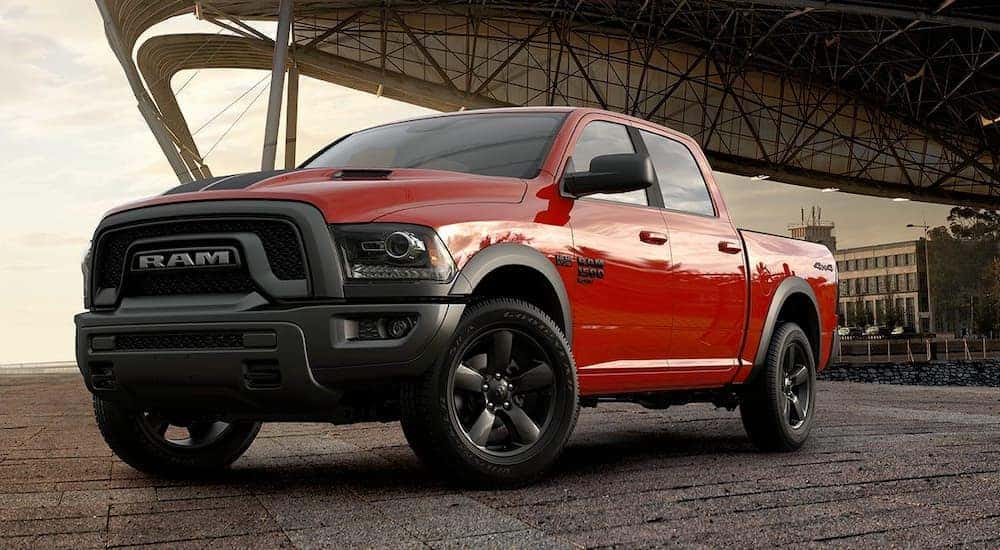
This stands for Gross Vehicle Weight Rating and indicates the maximum weight of the truck when fully loaded. This means that the payload is essentially the GVWR minus the curb weight. In fact, if you don’t see the payload rating listed, then you should look for GVWR and subtract the curb weight from it – that’s the payload capacity.
5 – GCWR
This term stands for Gross Combined Weight Rating and indicates the maximum weight of the truck, anything on it, and anything being towed. You primarily need to be aware of this if you are buying a truck for commercial purposes, as Federal law requires a Commercial Driver’s License when using a truck and trailer combination with a GCWR over 26,000 pounds.
6 – Two-Wheel Drive (2WD)
A vehicle with two-wheel drive is one in which power is sent from the engine to only two of the truck’s wheels. This helps boost fuel efficiency and reduces curb weight (increasing payload and towing), though it is not ideal in rough weather or for off-road conditions.
7 – Rear-Wheel Drive (RWD)
Most trucks with 2WD specifically have rear-wheel drive, which means the two wheels that receive power are those in the back. While a handful of 2WD trucks are front-wheel drive, rear-wheel drive means the weight of your payload or trailer is pushing down on the driven wheels and improves traction.
8 – Four-Wheel Drive (4WD or 4×4)
One of two options you can find on trucks other than 2WD, four-wheel drive means that all four wheels receive power from the engine. You typically have to manually activate the 4WD system (otherwise, it is effectively 2WD), and both the front and rear axle receive the same amount of power from the engine. This can be very advantageous on slippery surfaces, like snowy roads or when going off-road, but it should not be used on high-traction surfaces like pavement.
9 – All-Wheel Drive (AWD)
Similar to 4WD, all-wheel drive means that all four wheels receive torque from the engine, but different amounts of power can be sent to the front and rear axles. These systems are usually automatic and controlled by the vehicle, providing improved traction when needed rather than being manually activated by the driver. This is ideal for road use but falls behind true 4WD in the slipperiest situations.
10 – Horsepower
One of two specs you’ll see listed with the engines available on trucks, horsepower is a measurement of power. We won’t get into the physics of it, but the result is that higher horsepower means better performance at higher speeds. Because most people aren’t racing with their pickup trucks, it is not uncommon for even powerful commercial trucks to have relatively low horsepower ratings.
11 – Torque
The other spec you’ll see listed for an engine, torque is a measurement of rotational force. Again, we’ll skip the physics, but high torque is crucial for initial acceleration, towing, and pushing a loaded truck uphill. Horsepower and torque are closely related measurements, but torque is generally more important when it comes to trucks.
12 – Diesel Engine
Most pickup trucks on the road use gasoline, but diesel is a popular option for serious towing. Diesel engines typically cost more, and their added weight often reduces payload ratings, but they can provide tremendous amounts of torque and are extremely fuel-efficient. There’s no right or wrong answer as to whether you should choose a gas or diesel engine; it really depends on what you need.
13 – Cab Size
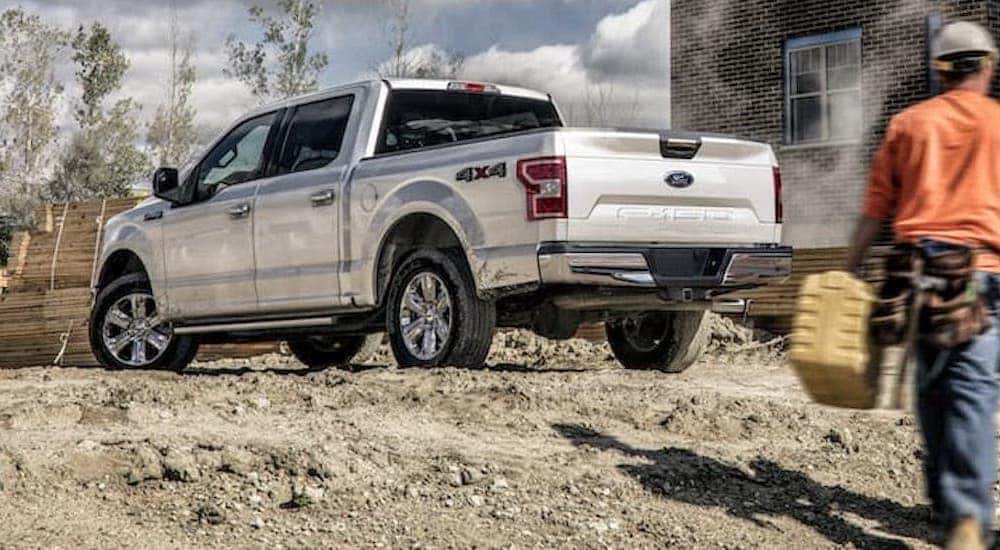
This indicates how large the cab is – different manufacturers use different terms, but you’ll often see things like “Regular,” “Quad,” “Double,” and “Crew.” Regular cabs only have front seats with a small storage area behind them, while a double or quad cab will have small rear seats. Crew cabs are the largest and offer four full-size doors as well as the most rear-seat space.
14 – Bed/Box Length
This indicates the length of the bed behind the cab. Different manufacturers will use various terms like “Short,” “Standard,” and “Long,” but there’s no universal meaning for these descriptions. It’s always best to look at the exact length of the bed in inches to get a truck with the right bed length for your needs.
15 – Dual Rear Wheel (Dually)
These are trucks that have four wheels on the rear axle – that is, one wheel on each side up front and two wheels on each side in the rear. The extra wheels allow these trucks to support extremely high payload and towing capacities at the cost of added bulk and expense. You’ll typically only find this option on one-ton heavy-duty models; unless you plan on handling some major weight, you don’t need it.
16 – Chassis Cab
These are trucks designed for commercial use – they have a cab and a bare rear chassis that can be built upon, rather than a standard bed or box behind the cab. A chassis cab is perfect for commercial applications because you can pick the rear configuration that best meets your needs. A used chassis cab model will likely already have a custom modification and can be a great buy if you find one that meets your needs.
0 comment(s) so far on 16 Important Truck Terms You Need to Know